
AI Referral Traffic: How Small Businesses Can Win Visitors From ChatGPT, Perplexity, and Beyond in 2026

AI referral traffic, website visits driven by AI tools like ChatGPT, Perplexity, and Gemini, now accounts for 1.08% of all web traffic and is doubling every quarter, according to a Conductor study of 3.3 billion sessions. That number sounds tiny until the compound math kicks in.
By 2027, brands building answer engine optimization authority today will be sitting on a meaningful slice of pre-qualified traffic. For small business owners, that's the opening. This roundup covers what changed, what to measure, and what to do before competitors catch on.
What Is AI Referral Traffic and Why It’s Reshaping SEO Now
AI referral traffic is any visit that lands on a website after a user clicks a citation or link inside an AI chatbot or answer engine. Think ChatGPT's source links, Perplexity's citation cards, or Gemini's recommended pages.
Here's why 1.08% deserves attention: HubSpot's 2026 consumer report found that 72% of shoppers plan to use AI more for product research this year. And AI-referred visitors convert at roughly 2–3× the organic rate because they arrive already informed, the AI has effectively pre-sold them.
Small businesses tend to dismiss this as a "big brand" issue. It isn't. The brands that lock in citations now will be the default answers when AI traffic goes mainstream. Want a head start? Explore our SEO services at ScaleBySEO to build that foundation.
How AI Search Engines Send Traffic to Your Website
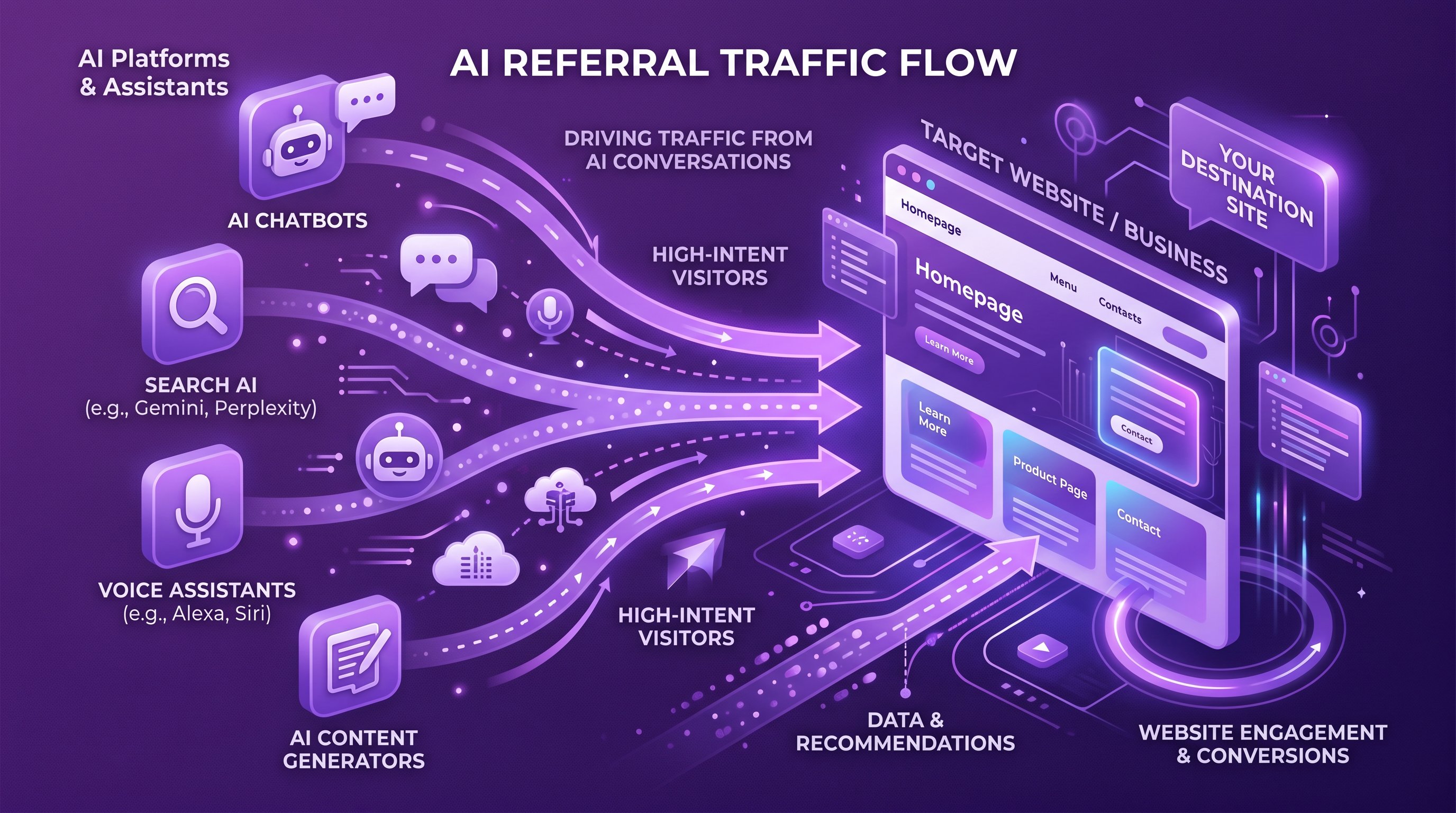
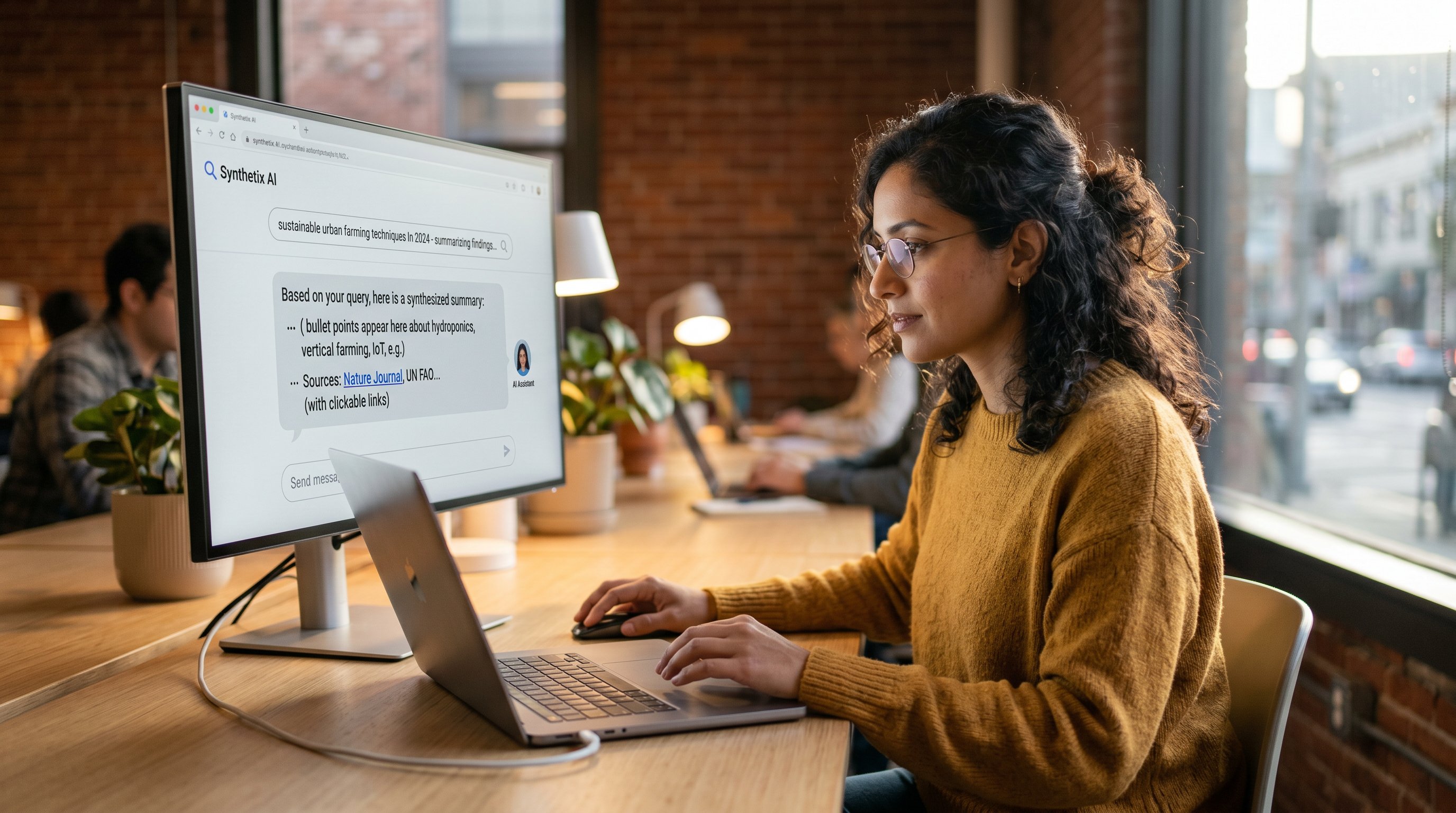
AI engines don't crawl and rank the way Google does. They synthesize answers from trusted sources, then surface clickable citations beside the response. A few patterns matter for small business owners:
ChatGPT pulls from Bing's index plus its own training data, citing sources inline.
Perplexity shows numbered citations and a sidebar of related links.
Gemini integrates with Google's 9 search surfaces, including AI Overviews.
The traffic arrives qualified. A user asking "best bookkeeper for Etsy sellers in Austin" who clicks a cited site is several steps deeper into the funnel than someone typing the same query into a search bar. That's why conversion rates skew so high, and why earning citations beats chasing impressions.
Measuring AI Referral Traffic in Google Analytics
GA4 doesn't track AI referrals out of the box, but setting up a segment takes about five minutes.
In GA4, create a new segment under Explore → Segments → New Segment → Session source. Add these conditions:
chatgpt.comperplexity.aigemini.google.combing.com(filter for Copilot referrals)claude.aiyou.com
Save it as "AI Referral Traffic." Now compare conversion rate, average session duration, and pages per session against organic search. Most small businesses see AI traffic outperform every other channel on engagement, even at low volume. That data becomes the business case for investing in an AEO strategy 2026.
Which AI tool is sending you the most visits so far? It's worth checking today.
Optimizing Your Content for AEO and GEO
Answer engine optimization (AEO) and generative engine optimization (GEO) share one rule: give the AI a clean, quotable answer in the first 60 words of any page. Skip the throat-clearing intros. Lead with the definition, the number, or the direct response.
A recent Generative Pulse study of 25 million AI citations found that 84% come from earned media, press mentions, guest features, directory listings, not from a brand's own site. That figure has held steady since July 2025. The takeaway: a PR program is now a GEO program.

Structuring Pages So AI Tools Cite You
Use this mini-template on key pages:
40–60 word direct answer at the top.
Supporting evidence, stats, sources, dates.
Examples or case data specific to your niche.
FAQ block with FAQ schema addressing related questions.
This structure mirrors how AI engines parse and quote content. For deeper tactics, our on-page SEO guide walks through schema setup step-by-step.
Combining SEO, Social Signals, and AI Visibility
AI visibility doesn't replace SEO, it stacks on top. A few news items from this week show how the channels now overlap:
Google Preferred Sources went global on April 30, 2026. Users who mark a site as preferred are 2× more likely to click it. Over 200,000 domains have been selected already. Add a "Follow on Google" button (available in 16 languages at Google Search Central) to a site footer this week.
March 2026 core update shifted 80% of top-3 results and pushed 24% of pages out of the top 100. Run a Search Console comparison using April 9 as the benchmark.
Local SEO update: Reviews now outrank backlinks for local pack visibility. Google parses review text semantically, so 12 detailed, service-specific reviews outperform 50 generic five-star ratings. Upload at least 2 new GBP photos per week, it's a confirmed ranking input.
TikTok metadata is now indexed by AI engines. Captions and descriptions are GEO signals.
Quick social hits worth a glance:
Snapchat Q1 2026: Revenue up 12% YoY to $1.53B: Dynamic Product Ads grew 30%+, worth retesting for ecommerce.
Threads: Native music sharing and animated stickers rolled out: early adopters see elevated reach.
LinkedIn × Amazon CTV: B2B targeting by job title and seniority now available on Prime Video and Freevee.
Google "Remy": A personal AI agent inside Gemini that books and buys autonomously, machine-readable site structure just became a competitive factor.
Calendar callouts:
X Communities shutdown, May 30. 22 days to migrate audiences to Discord, Substack, or email.
LinkedIn Live format changes, June 22. Test the new Event-based workflow before the deadline.
Conclusion
Action items this week: set up the GA4 AI traffic tracking segment, audit the top 5 pages for 60-word answer leads, add a Follow on Google button, and check Maps for claimable competitor slots. AI referral traffic is small today, and compounding fast. Want help building an AEO strategy that earns citations? Visit ScaleBySEO for tailored support.
What is AI referral traffic and how does it differ from organic search traffic?
AI referral traffic consists of website visits from users clicking citations in AI tools like ChatGPT, Perplexity, and Gemini. Unlike organic search, AI-referred visitors arrive pre-informed and convert at 2–3× higher rates because the AI has already synthesized and recommended your answer.
How do I track and measure AI referral traffic in Google Analytics?
Create a GA4 segment under Explore → Segments → New Segment → Session source, adding referral sources: chatgpt.com, perplexity.ai, gemini.google.com, bing.com (Copilot), claude.ai, and you.com. Compare conversion rates and engagement against organic to validate your AI traffic ROI.
What is answer engine optimization (AEO) and why does it matter for small businesses?
Answer engine optimization targets AI tools by providing clear, quotable answers in the first 60 words of your content. With AI traffic doubling quarterly and 72% of shoppers using AI for research, AEO positions small businesses to earn citations and pre-qualified leads before competitors catch on.

How can small businesses earn citations from AI search engines?
Focus on earned media: PR mentions, guest features, and directory listings generate 84% of AI citations. Structure pages with 40–60-word direct answers, supporting evidence, and examples. Add FAQ schema and use Google Preferred Sources to boost visibility in AI tool results and recommendations.
Does optimizing for AI referral traffic replace traditional SEO?
No. AI visibility stacks on top of SEO, not instead of it. Both channels overlap: Google's core updates now shift AI traffic, reviews outrank backlinks for local visibility, and schema markup helps AI engines parse and cite your content. Strengthen SEO fundamentals while building AEO authority.
Which AI tools are currently sending the most referral traffic to websites?
ChatGPT (using Bing's index), Perplexity, Gemini, and Claude are the primary sources of AI referral traffic today. Usage varies by niche. Check your GA4 AI traffic segment to identify which tool drives your highest-converting visitors, then prioritize citations on those platforms first.